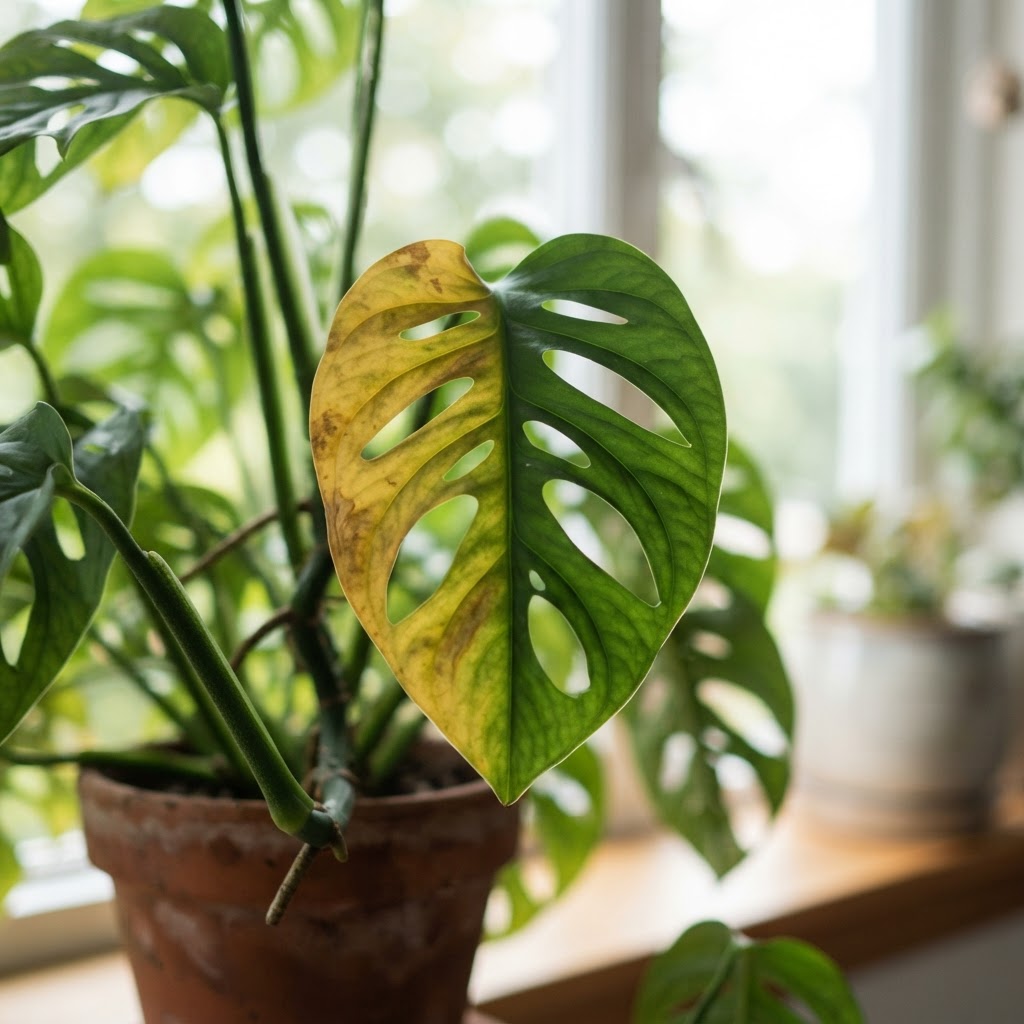
Why Are My Plant's Leaves Turning Yellow? 9 Causes and Fixes
Why Are My Plant's Leaves Turning Yellow?
Few things worry a plant owner more than watching a once-vibrant leaf fade to yellow. The good news: yellowing leaves are the houseplant equivalent of a check-engine light — a signal, not a death sentence. The trick is reading the signal correctly, because at least nine different problems start with the same symptom.
Here's how to diagnose what your plant is actually telling you — and exactly how to fix it.
1. Overwatering (the most common culprit)
If leaves are yellow and soft or droopy, and the soil feels soggy days after watering, your plant is drowning. Roots need air as much as water; saturated soil suffocates them, and the first visible sign is generalized yellowing, often starting with the lower leaves.
The fix: Let the top few centimetres of soil dry before watering again. If the soil stays wet for more than a week, check the roots — trim anything soft, brown and mushy, and repot into fresh, free-draining mix.
2. Underwatering
The opposite problem looks different: yellow leaves that are dry, crispy or curled, often with soil pulling away from the pot's edge. Pothos, peace lilies and ferns are quick to show it.
The fix: Water thoroughly until it drains from the bottom, and shorten the gap between waterings. A recurring dry-out means the plant may be root-bound — see point 8.
3. Natural ageing
Before panicking, check where the yellow leaf is. A plant slowly shedding its oldest, lowest leaves while continuing to push out new growth is simply reallocating energy. One or two yellow leaves a season on an otherwise healthy plant is completely normal.
The fix: Nothing — just snip the spent leaf off cleanly near the stem.
4. Too much direct sun
Leaves that yellow with bleached, scorched patches — especially on plants near a window with harsh midday sun — are getting sunburn. Monsteras, pothos and ZZ plants are frequent victims.
The fix: Move the plant a metre back from the window or behind a sheer curtain. Bright indirect light suits almost every popular houseplant.
5. Nutrient deficiency
If your plant has been in the same potting mix for over a year and yellowing appears in a pattern — older leaves yellowing from the tip inward often signals nitrogen hunger; yellow between green veins signals iron or magnesium shortage — the soil's nutrients are depleted.
The fix: Feed with a balanced liquid fertiliser at half strength every 2-4 weeks during spring and summer. Stop feeding in winter when growth slows.
6. Temperature stress and cold draughts
Most houseplants hail from the tropics and sulk below 10°C. Yellowing leaves near a draughty door, window or air-conditioning vent point to cold shock.
The fix: Keep plants in spots between about 15-30°C, away from direct blasts of hot or cold air.
7. Pests
Yellowing accompanied by fine webbing, sticky residue, or tiny specks on the leaf undersides means invaders: spider mites, mealybugs or scale are the usual suspects. Left alone, they drain the leaves and spread to every plant nearby.
The fix: Isolate the plant, wipe leaves with soapy water or insecticidal soap, and repeat weekly until the pests are gone.
8. A root-bound plant
If roots are circling the drainage holes and water runs straight through the pot, your plant has outgrown its home and can't take up water properly — which mimics both underwatering and nutrient deficiency.
The fix: Repot one size up (just 2-4cm wider) with fresh mix, ideally in spring.
9. Recent move or change
Plants are creatures of habit. A new home, repot, or sudden light change can trigger a short sulk: a leaf or two yellowing while the plant adjusts.
The fix: Patience. Keep care consistent and give it a few weeks to settle before making further changes.
Quick diagnosis cheat sheet
- Yellow + soggy soil → overwatering
- Yellow + dry, crispy → underwatering
- Yellow + scorched patches → too much sun
- Yellow + webbing or sticky spots → pests
- Yellow + pale new growth → nutrients
- One old leaf at a time → totally normal
Not sure which plant you're dealing with?
The right fix starts with the right plant — care needs differ enormously between species. Snap a photo with IdThatPlant for an instant identification plus a full care guide, so you'll know exactly how much light, water and warmth your plant actually wants.
Yellow leaves are a conversation, not a eulogy. Read the clues, make one adjustment at a time, and give your plant a couple of weeks to respond — most recover remarkably fast.

