The Ultimate Guide to Watering Your Plants Correctly
Why Watering Is the #1 Plant Skill
More plants die from improper watering than from any other cause. It's not just about how much water — it's about timing, technique, and understanding what your plant is telling you. This guide will transform how you water your plants.
The Golden Rule: When in Doubt, Wait
Most houseplants prefer to dry out slightly between waterings. A plant can recover from being too dry much more easily than from being too wet. Root rot — caused by constantly soggy soil — is often fatal.
How to Know When to Water
The Finger Test
Push your finger 1–2 inches into the soil. If it feels dry at that depth, it's time to water. If it's still moist, wait a few more days. This simple test works for most houseplants.
The Weight Test
Lift the pot. A dry pot is noticeably lighter than a wet one. Over time, you'll develop a feel for your plants' weight at different moisture levels.
The Moisture Meter
For precision, a moisture meter takes the guesswork out. Insert the probe into the root zone and read the moisture level. This is especially helpful for large pots where the finger test doesn't reach deep enough.
Visual Signs
- Drooping leaves — many plants droop when thirsty (pothos, peace lily)
- Dry, crispy edges — underwatering or low humidity
- Light-colored soil — dry soil often looks lighter
- Pot feels light — when picked up
How to Water Properly
Water Deeply, Not Frequently
The best approach is to water thoroughly until water runs from the drainage holes, then wait until the plant needs water again. This encourages deep root growth and prevents the shallow-rooting that comes from frequent light watering.
Water the Soil, Not the Leaves
Wet leaves invite fungal diseases. Aim water at the base of the plant. If you do get leaves wet, gently shake off excess water.
Use Room-Temperature Water
Cold water shocks roots. Let water sit for a while to reach room temperature and allow chlorine to dissipate. Rainwater and filtered water are even better — some plants (like spider plants) are sensitive to fluoride and chlorine in tap water.
Empty the Saucer
Never let a plant sit in standing water. After watering, wait 15 minutes and empty any water that collected in the saucer or cache pot. This prevents root rot and fungus gnats.
Signs of Overwatering vs. Underwatering
Overwatering Symptoms
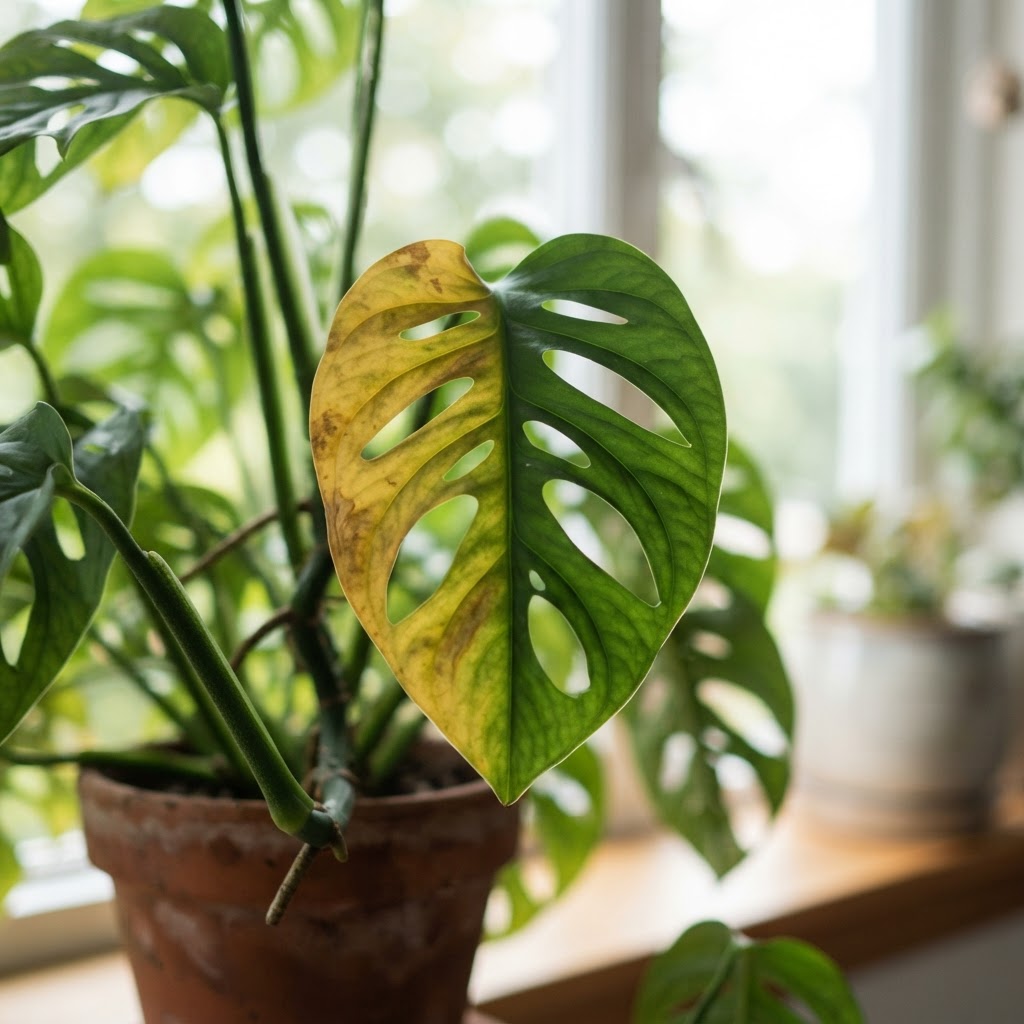
- Yellowing leaves (especially lower leaves)
- Soft, mushy stems or leaves
- Wilting despite wet soil
- Brown, soft spots on leaves
- Fungus gnats hovering around the plant
- Musty smell from the soil
Underwatering Symptoms
- Dry, crispy leaf edges
- Leaves curling inward
- Slow or no growth
- Soil pulling away from pot edges
- Dry, brittle roots
Seasonal Watering Guide
Spring and Summer (Growing Season)
Plants are actively growing and need more water. Most houseplants need watering every 1–2 weeks. Plants in brighter light or smaller pots may need water more frequently. This is also when you should fertilize.
Fall and Winter (Dormant Season)
Plants slow down and need less water. Reduce watering frequency by about half. A plant that needed water weekly in summer might need it every 2–3 weeks in winter. Watch for the signs rather than following a strict schedule.
Special Cases
Succulents and Cacti
These plants store water in their leaves and stems. Water deeply but infrequently — every 2–3 weeks in summer, monthly in winter. Let the soil dry completely between waterings.
Ferns
Ferns prefer consistently moist (not wet) soil and high humidity. Water when the surface feels dry. Mist regularly or use a humidity tray.
Orchids
Most orchids are epiphytes — they grow on trees, not in soil. Water once a week by running water through the bark mix, letting it drain completely. Never let orchid roots sit in water.
Common Watering Mistakes
- Watering on a fixed schedule — plants don't read calendars. Check soil moisture instead.
- Using pots without drainage — water accumulates and roots rot.
- Watering a little every day — shallow watering creates weak, shallow roots.
- Ignoring seasonal changes — plants need less water in winter.
- Not adjusting for pot size — small pots dry out faster than large ones.
- Watering sick plants more — a wilting plant in wet soil doesn't need more water; it has root rot.
Final Thoughts
Watering is a skill that improves with observation. Get to know each plant's preferences — some like to stay moist, others prefer to dry out completely. Use IdThatPlant to identify your plants and get specific watering recommendations. With practice, you'll develop an intuitive sense for when each plant needs water, and your plants will thrive.