Winning the Bug Battle: Identify and Defeat 5 Common Houseplant Pests
Spring is a wonderful thing. Your plants are waking up, putting out fresh growth, and enjoying longer days. Unfortunately, the same warmth that wakes your plants also wakes up their enemies. Pest numbers explode in spring, and a plant that has been quietly carrying a few bugs all winter can suddenly be under siege.
The good news: almost every common houseplant pest is easy to beat once you know what you're looking at. Misidentification is the real danger, because spider mite damage looks like a watering problem, and scale insects are often mistaken for part of the plant. Here's how to identify the five most common offenders and send each one packing.
1. Spider Mites: The Tiny Terror
How to identify them: Spider mites are almost invisible to the naked eye, but their damage isn't. Look for fine, pale stippling on leaves (like someone dabbed the surface with a pin), leaves turning dull and bronzy, and faint webbing where stems meet leaves. Hold a sheet of white paper under a leaf, tap the leaf, and look closely — the slow-moving specks that fall are your culprits.
How to beat them: Spider mites hate humidity and love dry, dusty conditions. Rinse the plant thoroughly in the shower or with a strong spray of water, wiping both sides of every leaf. Follow up with insecticidal soap, repeating every 5–7 days for a few weeks to catch newly hatched mites. Isolate the plant until you're confident the population is gone; these pests travel on currents of air and spread fast.
2. Mealybugs: The Cottony Squatters
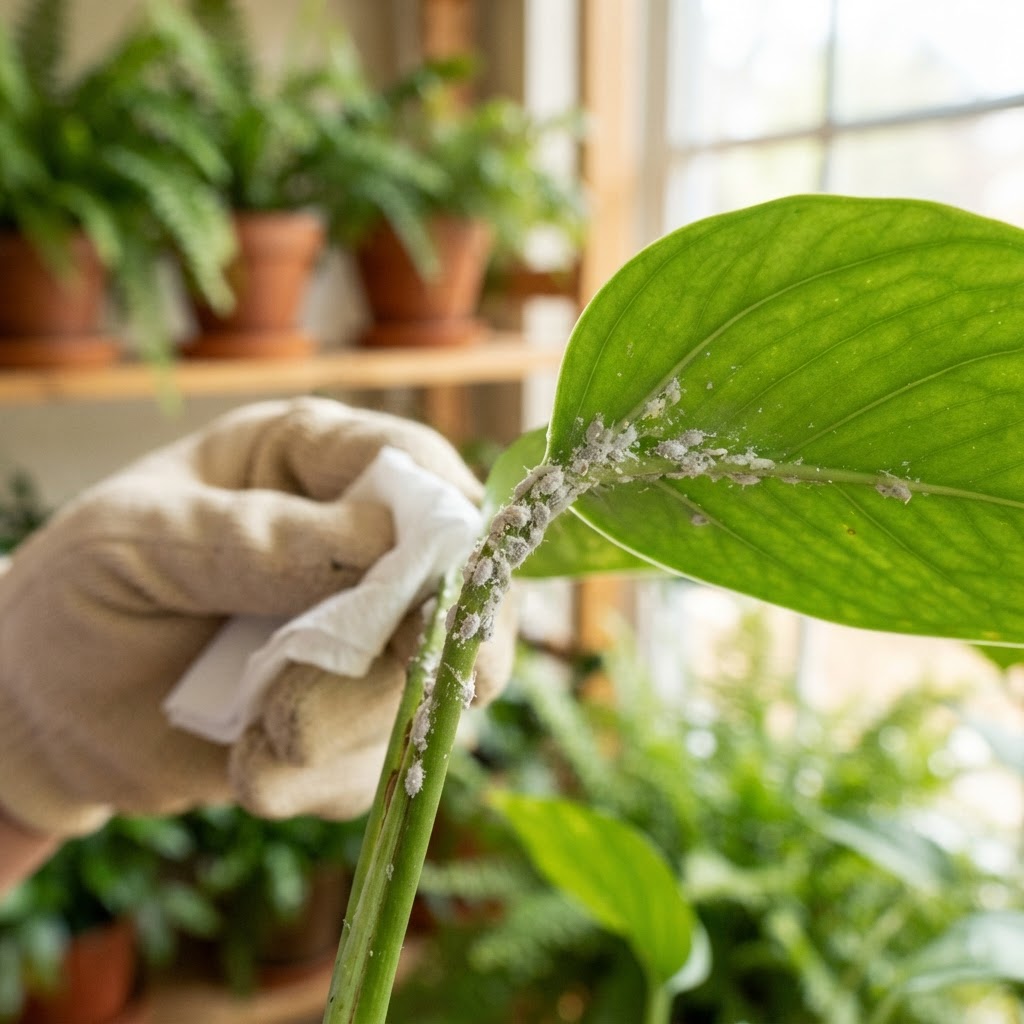
How to identify them: They're hard to miss once you know what they look like: small, oval insects covered in white, cottony fluff, usually clustered where leaves join stems, along the midrib, or in the soil's crevices. Leaves may go yellow and sticky, and a plant carrying a heavy infestation often looks generally weak and wilted despite proper watering.
How to beat them: For light infestations, a cotton bud dipped in regular rubbing alcohol kills mealybugs on contact — just wipe each bug off. Follow with a spray of insecticidal soap or neem oil, making sure to reach the leaf joints and the top layer of soil, where they hide and lay eggs. Mealybugs are persistent, so repeat treatment weekly until several inspections in a row come up clean.
3. Scale Insects: The Body Snatchers
How to identify them: Scale insects do something brilliantly sneaky: once they settle, they stop looking like insects. They become little brown or tan bumps glued to stems and the undersides of leaves, easily mistaken for part of the plant or a bit of corky bark. They don't move, and that's why they're often only discovered long after they've multiplied. Watch also for sticky honeydew on leaves below them, or a black sooty mould that grows on that honeydew.
How to beat them: Scraping them off manually with a fingernail or an old toothbrush is genuinely effective since they cannot reattach once dislodged. The young "crawlers" are vulnerable to neem oil and insecticidal soap, but the armoured adults are largely shielded by their shells, so repeat treatments at weekly intervals. Persistence pays: two or three rounds usually do it.
4. Fungus Gnats: The Unwelcome Tourists
How to identify them: These are the tiny black flies that erupt from the soil when you water or walk past. The adults are mostly a nuisance; the real damage is done by their larvae, which live in moist soil and nibble fine roots, especially on seedlings and young plants, causing wilting and slowed growth.
How to beat them: Fungus gnats are a symptom, not just a nuisance, because their larvae need constantly moist soil to survive. Let the top few centimetres of soil dry thoroughly between waterings — that alone breaks their life cycle. Sticky traps catch adults, and if infestations persist, a soil drench with Bacillus thuringiensis israelensis (Bti, widely sold as mosquito granules) safely kills larvae in the soil.
5. Aphids: The Fresh-Growth Raiders
How to identify them: Aphids love new, tender growth. Check the tips of shoots and the undersides of the new leaves in spring, and you'll find clusters of green, black, or grey insects, often with their shed white skins stuck nearby. Because aphids suck sap from the softest tissue, young leaves may come out curled and deformed before you've seen a single bug.
How to beat them: Aphids are the easiest pest on this list. A firm jet of water physically knocks them off (and the ones that fall rarely climb back), and targeted sprays of insecticidal soap on the visible colonies finish the job. Check the plant again after a few days, because aphids reproduce at extraordinary speed.
Prevention: The Cheapest Cure
The five commandments of keeping bugs at bay are simple. Quarantine new arrivals away from your collection for two weeks. Inspect regularly — weekly checks of new growth and leaf joints catch infestations early. Get watering right, as constantly soggy soil invites fungus gnats and stressed plants invite everything else. Keep leaves clean by dusting or showering regularly, removing the dry, dusty conditions mites love. Feed but don't overfeed, because lush, sappy growth is more attractive to pests.
One last tip: mystery leaf damage is one of the most common reasons plant owners reach for their camera, and you don't have to guess. Snap a clear picture of the affected plant and let the identification do the work, then match what you learn against the pest signs above. Fast diagnosis makes treatment dramatically easier, because every pest on this list is simple to beat on day one and much harder to beat once their descendants have moved in.
Happy growing — and keep that quarantine corner ready. 🌿