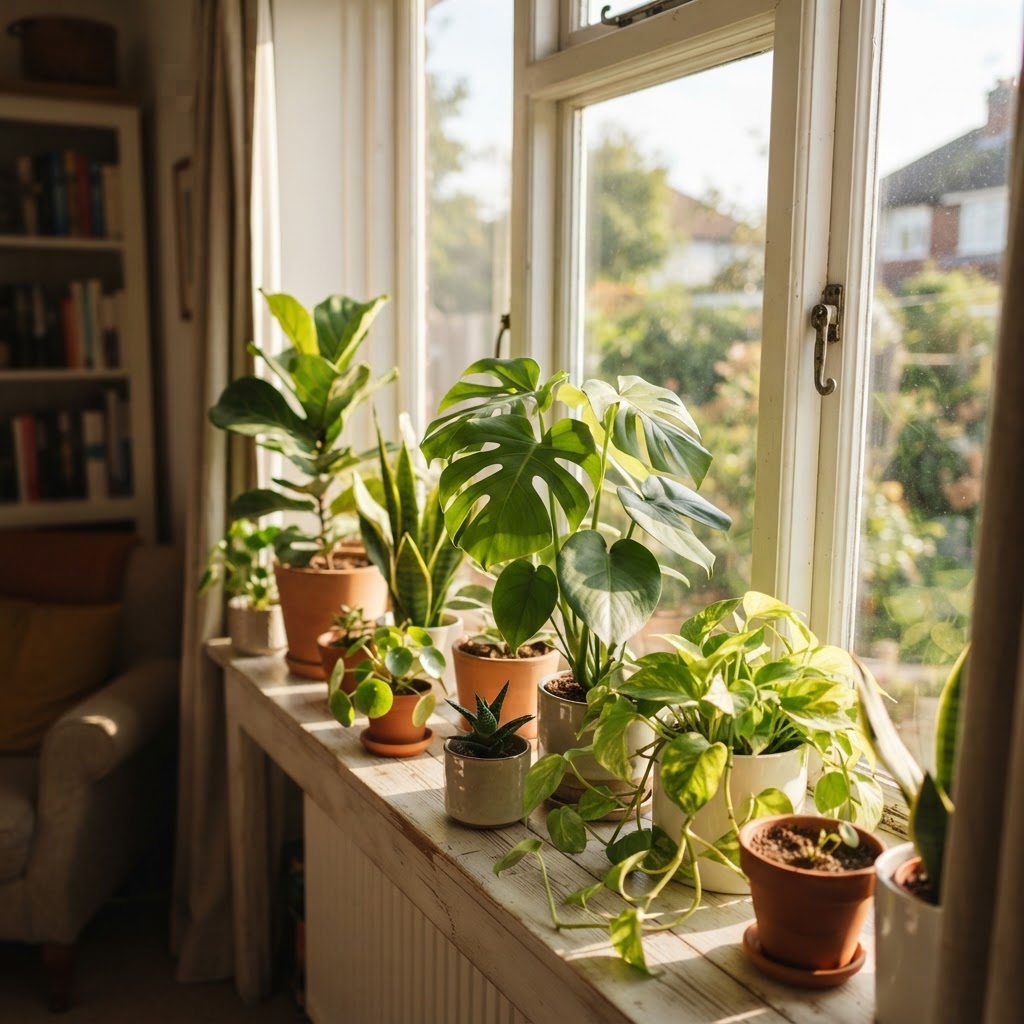
Why Do Plants Lean Toward the Light? The Science of Phototropism and Leggy Growth
Anyone who has kept a plant near a window knows the scene: a few weeks go by, and your once-upright pothos or seedling is craning sideways toward the glass like it's straining to catch a bus. It's charming and slightly comical, but it's also one of the best windows into how plants actually work. Your plant isn't clumsily tipping over — it's running a sophisticated light-tracking program that evolved over hundreds of millions of years. Here's the science behind the lean, and what to do about it.
Plants Don't Have Eyes, But They See Better Than You Think
Plants can't look at the sun the way we do, but they have photoreceptors that do something arguably better. Special proteins called phototropins sit in your plant's cells and act like tiny light meters, sensing the direction, intensity and colour of light striking the stem.
When light comes from one side, phototropins trigger a remarkable chemical imbalance. The plant redirects a hormone called auxin to the shaded side of the stem. Auxin tells cells to elongate, so the shaded side grows longer and faster than the lit side. Faster growth on one side than the other causes the stem to bend, arcing the whole plant toward the brightest light source.
This is phototropism, and it's incredibly precise. A seedling can detect a difference in light between its own two sides that's far too subtle for the human eye to register.
One-Sided Light Means One-Sided Growth
Outdoors, light usually comes from above, so plants grow straight and sturdy. Indoors, however, light comes overwhelmingly from one direction: a window. Because a window delivers only a fraction of the light of the open sky, your plant bends hard toward it, trying to maximise every photon.
This is why plants nearest to windows lean most dramatically, and why plants deeper in a room grow upright but slowly. If your plant's lean is gentle and it looks otherwise happy, it's doing exactly what a healthy plant should.
The Real Problem: Etiolation
There is a point where light-seeking turns from a healthy response into a warning sign. When light levels are simply too low, phototropism escalates into etiolation: rapid, weak, stretched growth.
An etiolated plant grows long, pale, skinny stems with widely spaced leaves, desperately reaching for light that isn't there. The plant prioritises stem length over leaf development, spending stored energy to climb toward brighter conditions, while chlorophyll production drops and leaves the new growth pale green or yellowish.
You can tell the difference between normal leaning and etiolation easily: a leaning plant with compact, sturdy, evenly coloured growth is healthy. A pale, spindly plant with big gaps between leaves is asking for more light.
How to Fix a Lopsided Plant
Rotate a quarter turn every week or two. This spreads growth more evenly and stops the permanent sideways lean. For fast growers in bright windows, weekly is best — a lazy Susan makes it effortless.
Move leggy plants closer to a window or brighter spot. In the southern hemisphere, north-facing windows get the most sun, with east-facing windows good for gentle morning light. Most foliage houseplants prefer bright indirect light, and sun-lovers like ficus can handle a few hours of direct morning sun.
Prune the stretch. Cut etiolated stems back to a growth point on firm, healthy growth. Most foliage plants respond with denser, bushier regrowth, since pruning releases side buds that were being suppressed by hormones from the stem tip.
Give seedlings a breeze. Outdoor wind triggers a stress response called thigmomorphogenesis, which builds shorter, thicker, stronger stems. Gently brushing seedlings with your hand daily, or pointing a fan at them for short periods, produces noticeably sturdier plants.
One Last Wonder: Your Plant Knows Which Way Is Down
While we're on the topic of plant navigation, gravity plays a role too. Even in complete darkness, roots grow down and shoots grow up — a process called gravitropism. Roots sense gravity through starchy structures that settle toward the bottom of their cells, telling the root which way is down. That's how a bulb planted sideways still sends its shoot to the surface.
Light from above, roots below, stems bending toward the sun: your quiet houseplant is running a full navigation system, no eyes required.
The Takeaway
A plant leaning toward light is a healthy plant doing its job. Your part is simple: rotate for even growth, watch for the pale-and-stretched look that signals genuine light starvation, and give light-hungry plants the window seat they're asking for. If you're not sure how much light your plant needs, look it up in the IdThatPlant database — every plant in it lists its sunlight preferences, so you can match the right plant to the right spot in your home before the stretching ever starts.