NPK Explained: What Those Three Numbers on Plant Food Actually Mean
NPK Explained: What Those Three Numbers on Plant Food Actually Mean
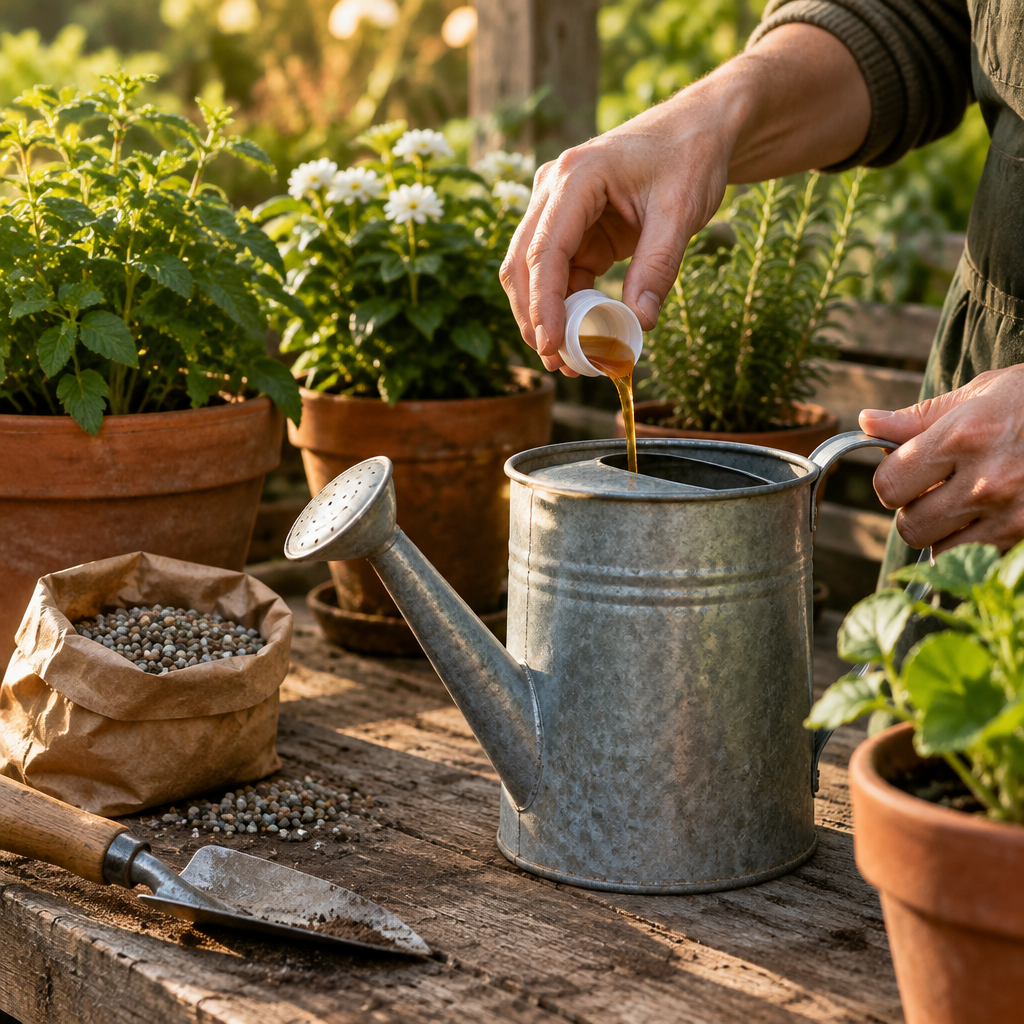
Every bottle of plant food in the shop is shouting the same three numbers at you: 20-20-20, 3-1-2, 10-5-8. They look like a code, and most of us buy whichever bottle has the prettiest flower on it and hope for the best. The truth is simpler than the label suggests, and once you know what those numbers do, feeding plants stops being guesswork and starts being one of the easiest wins in gardening.
The three numbers, decoded
They are always in the same order: nitrogen, phosphorus, potassium — N, P, K.
Nitrogen (N) is for growth. It builds leaves, stems and the green chlorophyll that does the photosynthesising. Plenty of nitrogen gives you lush, fast, leafy growth. Too much gives you a soft, floppy plant that pushes leaves at the expense of flowers, and it becomes a magnet for aphids.
Phosphorus (P) is for roots, flowers and fruit. It powers energy transfer and root development, which is why "bloom booster" and "root starter" products lean heavily on it. Australian soils are famously low in phosphorus, so garden plants often respond well to a little. Natives are the big exception, and we will get to that.
Potassium (K) is for strength and resilience. It regulates water movement, firms up cell walls, improves disease resistance and helps fruit and flowers finish properly. A plant short on potassium gives you thin stems, brown leaf edges and flowers that fade fast.
A "balanced" fertiliser like 20-20-20 gives equal parts of each. A "high potassium" flowering feed might be 10-5-15. Neither is better in general — they solve different problems.
The numbers are a ratio, not a strength
This trips up almost everyone. 20-20-20 and 10-10-10 have the same ratio, so they feed the plant the same way. The difference is concentration: the 20-20-20 is roughly twice as strong, so you use half as much, or dilute it twice as far.
That matters because the most common fertiliser mistake is not using the wrong type. It is using too much of a perfectly good one. Overfeeding burns roots, crusts the soil surface with salt and pushes weak, sappy growth that collapses the moment a hot week arrives.
What Australian natives actually need
Most of our native plants — grevilleas, banksias, waratahs, hakeas, many wattles — evolved in soils with almost no available phosphorus. They cope with this by forming specialised cluster roots that are extremely efficient at scavenging the tiny amount that exists. Give them ordinary garden fertiliser and those efficient roots pull in a dose their system cannot handle. The result is phosphorus toxicity: yellowing between the veins, brown leaf tips, sudden collapse, sometimes death in a single season.
Use a fertiliser labelled for natives, with phosphorus around 1 to 2 percent or lower, and only in spring. If a native is growing happily in the ground, it usually needs nothing at all. Potted natives are the exception — they run out of nutrients in the limited soil they have and do need a light native-safe feed.
When to feed, and when to put the bottle down
Feed when the plant is actively growing. For most of Australia that means spring and early summer, tapering off by late summer. In the tropics and subtropics, growth is more continuous, so smaller, more frequent doses work better than big seasonal ones.
Do not feed in these situations:
- During a heatwave. Roots are already stressed and cannot take up nutrients fast enough. Wait until the weather settles.
- When the soil is bone dry. Always water first, then feed. Fertiliser on dry soil draws moisture out of roots and burns them.
- A plant that is sick or newly repotted. Damaged roots cannot handle the salt load. Fix the problem first, feed once new growth appears.
- Right before dormancy. Late-autumn feeding encourages soft growth that frost will shred.
- Indoor plants in the depths of winter, unless they are under grow lights and still pushing new leaves.
Organic or synthetic?
Both work. Synthetic fertilisers are fast, precise and cheap; they deliver a measured dose of exactly what the label says. Organic products — compost, blood and bone, seaweed, worm castings, pelletised manures — release more slowly, feed soil life, and improve structure over time, which matters more than any single nutrient hit.
A sensible middle path: build the soil with compost and mulch, then use a light liquid feed through the growing season to top up. Slow-release granules are fine for pots and hanging baskets, where nutrients leach out with every watering.
The signs you are overfeeding
Watch for a white or crusty ring on the soil surface or the rim of the pot, brown and crispy leaf tips despite damp soil, leggy growth with wide gaps between leaves, lots of foliage and no flowers, and a general sulk that does not match the season.
If you spot these, stop feeding and flush the pot with several volumes of plain water, letting it drain freely each time. Cut back to half strength for the rest of the season.
A simple feeding rhythm
Leafy houseplants and ferns: half-strength liquid feed every three to four weeks in spring and summer. Flowering plants: a higher-potassium feed every two weeks while budding, stopping once flowers fade. Vegies and herbs: a nitrogen-leaning feed every two to three weeks through the growing season. Natives and succulents: a light native-safe or low-nitrogen feed once in spring, and nothing more. Cacti and most succulents genuinely thrive on neglect.
Read the label, halve the dose to start, and let the plant tell you what it needs. Leaves, flowers and roots will always give you an honest answer — and if you are not sure what you are looking at, point your camera at it and let the app do the naming.