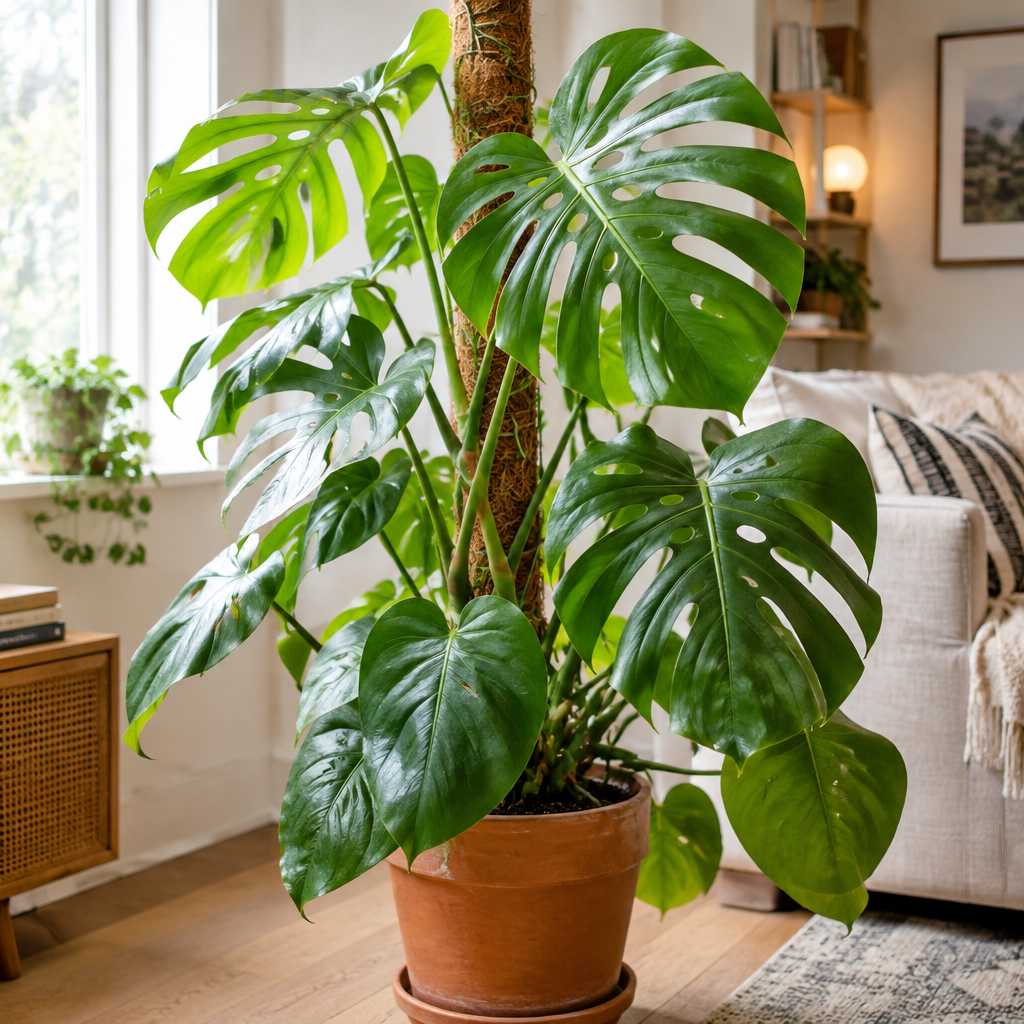
Plant Spotlight: Monstera Deliciosa, the Swiss Cheese Plant Worth the Hype
Few houseplants have achieved true celebrity status, but the Monstera deliciosa — better known as the Swiss Cheese Plant — has earned every bit of its fame. With leaves that can grow as wide as dinner plates and develop those iconic splits and holes, it brings a slice of Central American rainforest straight into your living room. It's the plant that launched a thousand Instagram accounts, and unlike most trends, this one deserves the hype: it's vigorous, forgiving, and endlessly rewarding to grow.
Meet the Monstera
Native to the rainforests of southern Mexico and Central America, Monstera deliciosa is a climbing aroid from the Araceae family. In the wild it scrambles up tree trunks toward the canopy, and indoors it happily does the same thing on a moss pole — reaching 2 to 3 metres in a bright corner of your home. The name says it all: Monstera for its monstrous size, deliciosa for its edible fruit (more on that later).
Young plants start with small, solid, heart-shaped leaves. The famous fenestrations — splits and holes — only appear as the plant matures and gets good light, so if your new monstera looks a bit plain, be patient. It's growing into its look.
Why the Holes? The Secret Inside the Splits
Those dramatic holes aren't just a fashion statement. In its native rainforest, the fenestrations serve two clever purposes: they let sunlight and wind pass through to the lower leaves, and they reduce the sail-like surface area that could tear in a storm. A monster leaf without holes would act like a kite in a downpour — with them, the breeze slips right through. Botanists also believe the holes help the plant catch dappled light flecks that flicker through the forest canopy.
Is It Really a Monstera? A Quick ID Check
Monsteras are often confused with their look-alike cousins, especially the Split-Leaf Philodendron. Here's how to tell a true Monstera deliciosa:
- Leaf shape and splits: Mature monstera leaves are large, glossy and heart-shaped, with splits that radiate from the midrib and oval holes forming closer to the centre of the leaf — not just at the edges.
- Thick, vining stems: Sturdy green stems with visible nodes and long aerial roots that reach out to grip whatever's nearby.
- Growth habit: An energetic climber that leans and reaches rather than forming an upright bush.
If you're not sure what that unruly climber in your hallway actually is, snap a photo — the IdThatPlant app will identify it in seconds, along with a tailored care plan.
Monstera Care Essentials
The best thing about monsteras? They're genuinely easy once you nail the basics.
Light: Bright, indirect light is the sweet spot. A position near an east or north-facing window (in the southern hemisphere) is ideal. It will tolerate medium light, but growth slows and new leaves may come out without splits. Direct midday sun scorches the leaves, leaving crispy brown patches — that's your cue to pull it back from the glass.
Water: Let the top 3–4 cm of soil dry out before watering — roughly every 1 to 2 weeks indoors, less in winter. Yellowing leaves are the classic overwatering alarm. When in doubt, wait a day or two; a monstera forgives drought far more readily than soggy feet.
Soil: A well-draining, airy mix rich in organic matter — a blend of peat (or coco coir), perlite and bark — keeps roots happy. It must never sit in waterlogged soil, or root rot will follow.
Support: Give it a moss pole or sturdy stake as it climbs. Aerial roots will grip the support, and the plant rewards you with bigger, more heavily fenestrated leaves.
Maintenance: Wipe the leaves monthly with a damp cloth to keep them dust-free and glossy (dusty leaves can't photosynthesise properly), and repot every 1 to 2 years into a slightly larger pot in spring.
Quick Troubleshooting
- No splits on new leaves: Usually a light or maturity issue — move it brighter and give it time.
- Yellow leaves: Nearly always overwatering. Check your soil and cut back.
- Crispy brown edges: Too much direct sun or the air is too dry.
- Leggy, stretched growth: It's reaching for light — relocate closer to a window.
One Important Warning: Keep It Away From Pets
Here's the catch, and it matters. Monsteras are toxic to cats, dogs and humans if ingested. The plant's tissues contain insoluble calcium oxalate crystals that cause intense mouth irritation, drooling and vomiting if chewed. It's rarely life-threatening, but it's genuinely unpleasant for a curious pet. If you have a cat that samples everything green, either place your monstera somewhere out of reach or choose a genuinely pet-safe alternative like a spider plant, parlour palm or calathea instead.
The Delicious Bonus
Grow a monstera long enough and patient enough, and mature plants may produce a fruit that truly earns the species name. The cone-like fruit ripens over months, and when the green scales begin to lift, the creamy flesh inside tastes like a tropical blend of pineapple and banana. It's rare indoors, but a fun prize for dedicated growers — and another reason to give this plant a decade, not just a season.
Ready to Grow?
The monstera is the perfect poster child for everything houseplants offer: drama, forgiveness and visible progress. Give it bright light, a drink only when the soil dries, something to climb, and it will repay you with a jungle of its own.
And if a mystery plant in your home or garden needs a name — monstera or otherwise — that's exactly what we're here for. Snap a photo, get an instant identification and a complete care plan at idthatplant.com.